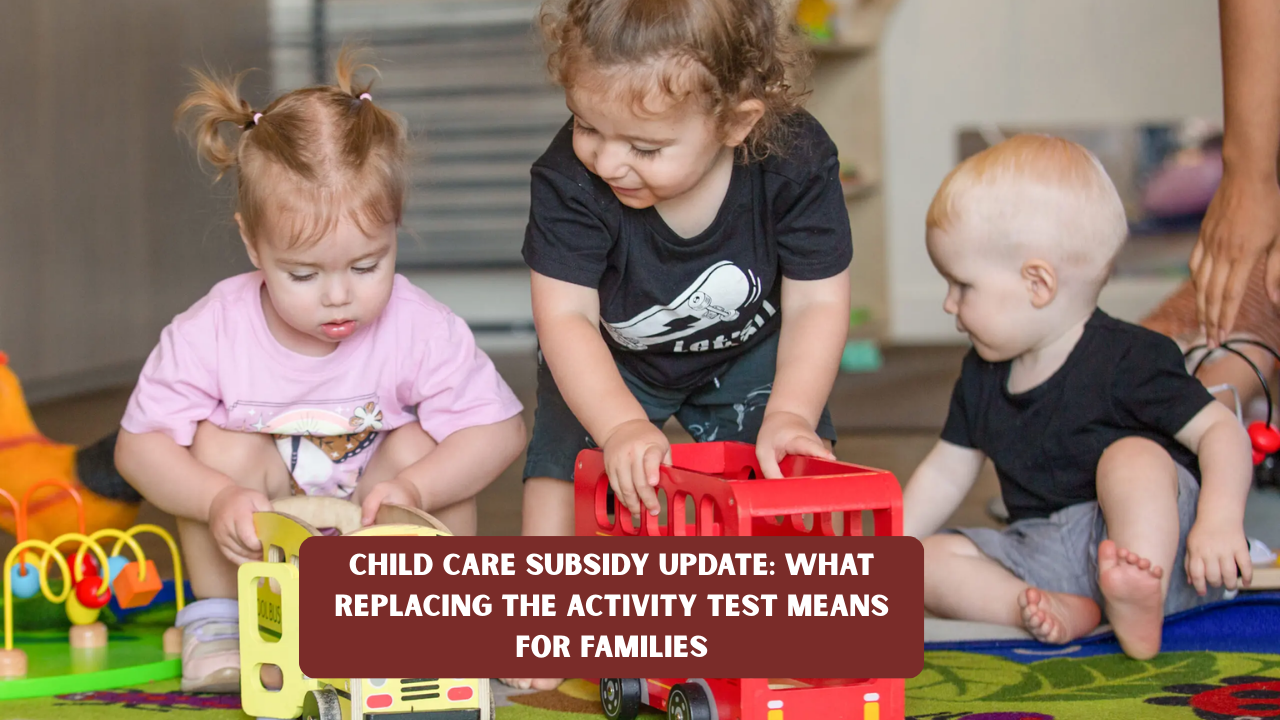
In an era where the cost of living dominates every household conversation, the Australian government is making a historic shift in how it supports early childhood education. For years, the “activity test” has been a significant hurdle for many parents, often acting as a barrier rather than a bridge to accessing quality care.1 As we move into 2026, the landscape of the Child Care Subsidy (CCS) is set for a massive transformation.2 By replacing the rigid activity test with a more flexible “3 Day Guarantee,” the government aims to ensure that every child—regardless of their parents’ employment status—has a seat at the table of early learning.3
Understanding the Shift to the 3 Day Guarantee
The traditional activity test was designed with a simple philosophy: the more you work, study, or volunteer, the more subsidized child care hours you receive.4 While this sounded logical on paper, it created a “catch-22” for many. Families often couldn’t find work without reliable child care, but they couldn’t afford child care without a job.5 Starting January 5, 2026, this cycle is being broken.6 The new “3 Day Guarantee” ensures that all CCS-eligible families can access at least 72 hours of subsidized care per fortnight.7 This change shifts the focus from “parental activity” to “child development,” acknowledging that the first five years of a child’s life are critical for their long-term success.
Who Benefits Most from the New Policy?
This policy update is a lifeline for low-income earners, single parents, and those in the “gig economy.” Under the old rules, if you worked fewer than eight hours a fortnight and earned over a certain threshold, you received zero hours of subsidy.8 Now, even if you are searching for work or managing a household with irregular hours, your child is guaranteed access to three days of care per week.9 For Aboriginal and Torres Strait Islander families, the support goes even further, with a guarantee of 100 hours per fortnight, ensuring that cultural and educational inclusion starts from day one.
CCS Subsidized Hours: Old vs. New (Effective 2026)
| Family Situation / Activity Level | Current Subsidized Hours (Fortnightly) | New 3 Day Guarantee (Fortnightly) |
| Less than 8 hours of activity | 0 to 24 hours (Income dependent) | 72 Hours |
| 8 to 16 hours of activity | 36 Hours | 72 Hours |
| 16 to 48 hours of activity | 72 Hours | 72 Hours |
| More than 48 hours of activity | 100 Hours | 100 Hours |
| First Nations Families | 36 Hours (Minimum) | 100 Hours |
Economic Impact and Workforce Participation
Critics of the activity test have long argued that it discouraged primary caregivers—predominantly women—from re-entering the workforce.11 By removing the fear of losing subsidies due to a change in shifts or a temporary gap in employment, the government is providing a stable foundation for families to plan their careers. Data suggests that this change will save approximately 66,700 families an average of $1,370 per year.12 Beyond the immediate savings, the broader economy benefits from increased participation and a future workforce that entered school better prepared.
Navigating the Income Thresholds in 2025-2026
While the hours of care are becoming more accessible, the percentage of your subsidy remains tied to your household income.13 For the 2025-2026 period, the maximum subsidy rate is set at 90% for families earning up to $85,279.14 As income rises, the subsidy tapers down.15 It is important for parents to remember that the “3 Day Guarantee” refers to the entitlement of hours, not a 100% discount on fees.16 Families will still be responsible for the “gap fee,” which is the difference between the provider’s daily rate and the government’s subsidy cap.
Challenges: Supply and the “Child Care Deserts”
While the removal of the activity test is a win for affordability and access, it presents a new challenge: demand. With more families now eligible for more hours, the pressure on child care centers to provide places will intensify. In regional and rural areas, often referred to as “child care deserts,” the government is investing additional funds to expand services.18 However, parents are encouraged to check with their local providers early, as the guarantee of a subsidy does not always guarantee an immediate physical spot in a crowded center.
What Families Need to Do Now
The best news for busy parents is that the transition is designed to be seamless. If you are already receiving the Child Care Subsidy, Services Australia will update your records automatically when the changes take effect in early 2026. There is no need to lodge a new claim unless your personal circumstances, such as your total household income, change significantly. However, it is a good idea to log into your MyGov account periodically to ensure your income estimates are accurate, as this prevents unexpected debts at the end of the financial year.
The Path to Universal Child Care
This update is widely seen as a stepping stone toward a truly universal child care system in Australia. Experts from the Productivity Commission have noted that making early education accessible to everyone—not just those who “earn” it through work—is one of the most effective ways to reduce intergenerational poverty. By prioritizing the child’s right to learn over the parent’s obligation to work, the “3 Day Guarantee” marks a fundamental shift in Australian social policy, moving the nation closer to a future where quality care is a right, not a privilege.

FAQs
1. Does the 3 Day Guarantee mean child care is now free?
No. It means you are entitled to have the government pay a portion of the fees for at least 72 hours a fortnight.19 You will still need to pay the “gap fee” based on your subsidy percentage and the price charged by your provider.20
2. I work full-time; will I lose my 100 hours of subsidy?
No. Families who engage in more than 48 hours of recognized activity per fortnight will still be eligible for the maximum 100 hours of subsidized care.21 The new policy only increases the “floor” for those who previously had fewer hours.
3. When exactly do these changes start?
The replacement of the activity test and the commencement of the 3 Day Guarantee is scheduled for January 5, 2026.22 Until then, the current activity test requirements remain in place.
disclaimer
The content is intended for informational purposes only. you can check the officially sources our aim is to provide accurate information to all users.