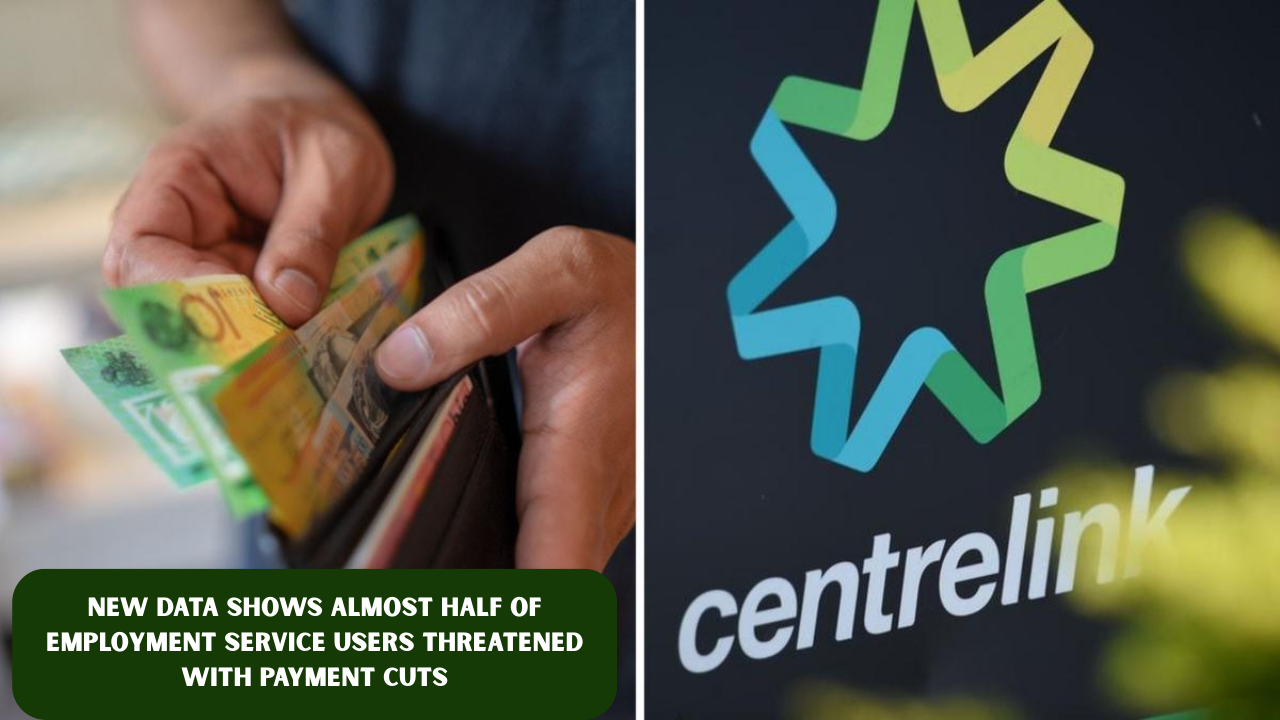
A startling new release of government data has exposed a deepening crisis within the nation’s welfare and employment services system. According to the latest figures from the Department of Employment and Workplace Relations, nearly half of all individuals engaged with Workforce Australia providers faced the threat of payment suspension in the third quarter of 2025.2 This sharp increase in compliance-driven notifications has reignited the debate over the effectiveness and fairness of the “mutual obligation” framework, with advocates warning that the system is causing unnecessary distress to the country’s most vulnerable job seekers during a period of economic uncertainty.
A Spike in Compliance Notices
The data, which covers the period from July to September 2025, reveals a dramatic 23% escalation in the issuance of payment suspension notices compared to the previous quarter. In total, approximately 618,000 suspension notifications were sent to employment service users. These notifications are automatically triggered when a participant fails to meet specific requirements, such as attending an appointment or meeting a monthly point target for job searches. While not all threats resulted in a permanent loss of income, a staggering 290,000 of these cases led to an actual temporary pause in payments, forcing recipients to urgently re-engage with their providers to unlock their funds.
The Automated Compliance Trap
At the heart of this issue is the Targeted Compliance Framework (TCF), an automated system designed to monitor and enforce mutual obligations. Critics argue that the TCF lacks the nuance required to handle complex human circumstances. The system often flags participants for minor administrative errors or misunderstandings, instantly freezing payments until the issue is resolved. This “shoot first, ask questions later” approach creates a volatile environment where financial stability is constantly at risk. The sheer volume of suspensions suggests that the system is operating with a high degree of rigidity, often penalizing users for systemic inefficiencies rather than genuine non-compliance.
Disproportionate Impact on Vulnerable Groups
Perhaps the most concerning aspect of the new data is the unequal burden placed on specific demographics. The statistics indicate that marginalized communities are facing the brunt of these automated penalties.11 First Nations peoples were the most severely affected group, with over half of those in the system receiving at least one payment suspension notice during the quarter. Similarly, a significant portion of people with disabilities and the long-term unemployed reported facing these punitive measures. This disparity has led to accusations that the compliance algorithms may be inadvertently reinforcing systemic bias, trapping disadvantaged groups in a cycle of penalty and poverty.
Breakdown of Suspension Threats by Demographic (Q3 2025)
| Demographic Group | Percentage Affected | Primary Reported Barrier |
| First Nations People | 52% | Digital reporting hurdles & remote access issues |
| Long-term Unemployed | 42% | Mental health strain from repeated compliance threats |
| People with Disability | 30% | Difficulty meeting rigid physical activity or appointment requirements |
| Youth Allowance Recipients | 15% | Lack of experience navigating complex bureaucratic systems |
| General Population | ~47% | Administrative errors and appointment scheduling conflicts |
The Human Cost of Bureaucracy
Beyond the raw numbers lies a grim reality for hundreds of thousands of Australians. For a job seeker living on a tight budget, even a payment delay of two or three days can be catastrophic. Social service organizations report that the fear of suspension forces many users to prioritize compliance activities over genuine job seeking or skills training. The psychological toll is immense, with users describing a constant state of anxiety regarding their next payment. The “threat-first” model has been criticized for eroding trust between employment providers and participants, making the journey to employment more difficult rather than easier.
Calls for Systemic Reform
The release of this data has intensified pressure on the federal government to overhaul the employment services sector. Welfare advocacy groups and the Australian Council of Social Service (ACOSS) are calling for an immediate suspension of automated payment freezes. They argue that the current model is punitive rather than supportive and that resources should be redirected toward personalized employment assistance. In response to the outcry, the government has announced a parliamentary inquiry to examine the legality and ethical implications of using automation to suspend essential safety net payments.
Government Response and Future Steps
In light of the backlash, the Department of Employment and Workplace Relations has implemented a temporary “holiday pause” on suspensions over the Christmas and New Year period to ensure no one is left without funds during the holidays. Furthermore, officials have hinted at a transition toward a new model in 2026, tentatively titled “Inclusive Employment Australia,” which promises to replace the rigid TCF with a more person-centered approach. However, until these legislative changes are solidified, millions of Australians remain subject to the current compliance regime, navigating a maze of requirements to keep a roof over their heads.
Navigating the Current Landscape
For now, users of employment services are advised to document every interaction with their providers meticulously. Legal aid centers recommend that participants keep records of all appointments and job search efforts to dispute any incorrect suspension notices quickly. While the promise of reform offers some hope, the current data serves as a stark reminder of the friction between automated efficiency and human welfare. As the inquiry progresses, the nation watches closely to see if the government can balance the need for accountability with the duty of care owed to its citizens.
FAQs
1. What triggers a payment suspension notice?
A notice is typically triggered automatically if the system records a “mutual obligation failure,” such as missing a scheduled appointment with a provider, failing to declare income, or not meeting the required number of job search points for the month.24
2. Can I get my payment back if it is suspended?
Yes. In most cases, a suspension is a temporary hold rather than a cancellation.25 You usually need to contact your employment services provider immediately to “re-engage” (e.g., re-book the missed appointment), which should unlock the payment within a few days.26
3. Is the government getting rid of mutual obligations?
Not entirely. While there are discussions about reforming the system to be less punitive, mutual obligations currently remain in force.27 However, there are temporary pauses on penalties during specific periods, such as the end-of-year holidays.
disclaimer
The content is intended for informational purposes only. you can check the officially sources our aim is to provide accurate information to all users.